How I make $42k/mo passively with simple no-code apps (copy me)
Making $10,000 a month passively isn't exactly common for bootstrapped apps. Most founders struggle to crack $5K MRR, let alone sustain that revenue for years without active marketing.
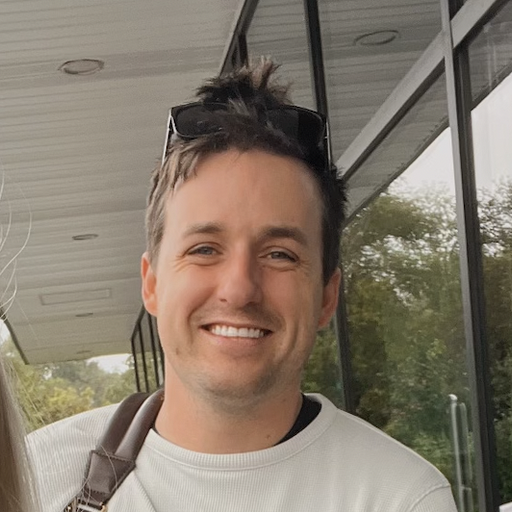
The validation that almost didn't happen
Kyle Fowler's journey began in 2019 when he wanted to catalog his baseball card collection. Searching the App Store for a scanning app yielded no results, so he decided to build one himself. Rather than working in isolation, Kyle posted about his idea on r/baseballcards before writing code. The response was modest—about 12-15 people expressed interest.
Kyle abandoned the project temporarily because he couldn't figure out how to implement images in card rows. Six years later, a stranger on Reddit messaged asking if he was still working on it. This inquiry prompted Kyle to finally complete what he'd started.
Launch day reality: $60 and a dream
When Cardstock launched, Kyle posted in r/baseballcards and achieved twelve paid downloads at $4.99 each—totaling $60. These were paid purchases, not free trials, because charging upfront "seemed easy." He didn't initially realize subscriptions were an option.
Despite the modest start, those twelve paid customers marked the beginning of what would become consistent $10,000 monthly revenue.
The ASO strategy that generated $10K/month for two years straight
Kyle stumbled into App Store Optimization almost accidentally. Apple offered a $100 free ad promotion, prompting Kyle to research how to use it effectively. He spent two weeks using Sensor Tower's free trial to identify winning keywords: "baseball card scanner," "baseball card value," and "find value for baseball cards."
By incorporating these terms into his app title and subtitle, Cardstock achieved the #1 ranking for "baseball card scanner" and maintained it for two to three years. Kyle generated "consistent revenue through college, traveling, and barely touching the app." This represented pure passive income derived from ASO alone.
The moment everything changed (and Kyle had to pivot fast)
In May 2024, Kyle lost his ASO rankings. Downloads dropped suddenly, forcing him to identify new growth channels immediately.
His solution involved hiring his friend Jacob from Wendy's to create TikTok content. Neither had marketing experience. Their initial videos barely received 20 likes. However, Kyle maintained the philosophy that the idea would be mimicking existing content.
They experimented with memes, silent pack openings, and Duolingo-style brand content. Most attempts failed, but persistence eventually revealed a winning format.
The TikTok format that generates 7,600 posts per month
The successful formula involved displaying a desirable card for 3-5 seconds, scanning it with the app visible, then revealing its value. This format proved endlessly repeatable because Kyle and Jacob controlled every variable—hook text, card selection, pacing, and the reveal sequence.
Every action, every text, every word should have a purpose.
The videos weren't designed to explain the app; instead, they aimed to generate "what's the app?" comments, signaling engagement to TikTok's algorithm.
Kyle created a master document titled "Core TikTok Strategy" containing sections like "Hook users," "Storytelling commentary," and "Every action should have a purpose." This systematic approach from day one yielded 7,600+ posts monthly across multiple creator accounts.
Scaling to 150+ creators without losing your mind
After validating the slideshow format, Kyle faced a scaling challenge: managing numerous creators without consuming all his time.
He initially hired creators manually through TikTok outreach and negotiations. While functional, this approach didn't scale effectively.
Kyle then discovered Noise, a platform automating creator management. He uploaded 230+ slideshow images and hook templates directly to Noise. The platform auto-generated slideshows and distributed them to creators, handling attribution and payouts automatically.
Kyle pays creators approximately $1 CPM (cost per thousand views), with Noise taking half. This meant creators earned roughly 50 cents per thousand views. Despite seeming modest, the volume proved substantial—Kyle generated 27 million views for $2,600. He observed that "it's the sheer bulk of posts that just leads to conversion rate."
The "everything works" philosophy that most founders miss
Kyle doesn't obsess over identifying the perfect growth channel. Instead, he experiments until discovering what works.
"I feel like the key is that they all probably work," Kyle stated. He sees conflicting advice constantly on Twitter—some claim paid ads don't work while others swear by them. Kyle's perspective: "X thing probably works. You probably just didn't try it hard enough."
His approach was methodical: spend two years perfecting ASO, then spend months iterating TikTok formats. Rather than channel-hopping, he commits deeply until understanding what works.
From $4.99 one-time purchase to $5/month recurring (and why it changed everything)
Kyle initially resisted switching to subscriptions, questioning who would pay $5 monthly for Cardstock. However, after sufficient encouragement to test it, he implemented a subscription model: $5/month, $50/year, or $99 lifetime access.
Revenue dramatically increased upon switching to subscriptions. Kyle's revenue chart displays a significant spike at this transition point. That single change propelled him from steady $10K months to $30K+ months. Had Kyle remained with the $4.99 one-time purchase model, he wouldn't have approached $41K MRR.
How Kyle built Scanémon in record time using AI dev tools
Inspired by a Pokémon Glaceon card encountered at a card show, Kyle recognized opportunity in the Pokémon card space—feeling the same collector's appeal from his childhood.
Rather than rebuilding from scratch, Kyle adapted Cardstock's existing framework. Using AI development tools, he modified the scanning technology for Pokémon cards. The strategy remained identical: same TikTok slideshow format with different cards, same ASO principles with different keywords, same subscription model for a different audience.
Scanémon currently generates approximately $9K monthly and continues growing. Because Kyle already determined the successful formula, he applied proven tactics to a new niche rather than reinventing the wheel.
Why Kyle learned to do everything himself before hiring
Kyle employs a counterintuitive hiring philosophy: master skills yourself before outsourcing them. He explained that "you have to learn enough of how to do something yourself in order to recognize someone great at it."
This approach proved valuable when working with a UGC agency. Because Kyle spent months creating TikTok content with Jacob, he immediately recognized whether the agency understood what they were doing.
This forcing function stemmed from bootstrapping constraints. Without VC funding to throw at agencies, Kyle needed to maximize each dollar spent. This required deeply understanding each channel before scaling it.
The network effect that nobody talks about
Kyle credits much success to being "overly on Twitter" and making founder connections. He doesn't gatekeep insights—he shares what works openly.
"So many people are just happy to help," Kyle noted. He initially believed asking questions burdened others, but discovered that helping others has become something he loves doing.
The key insight: genuine curiosity and openness to feedback are rare qualities. When Kyle shares advice, many people act dismissively or don't truly listen. However, when encountering someone genuinely curious, he shares everything.
This creates a compounding flywheel. The more Kyle shares, the more people want to help him. The more assistance received, the faster he learns. Faster learning increases the value of his insights, making experienced founders more willing to share with him. This cycle is completely voluntary and abundance-minded rather than gatekeeping-focused.
Practical advice for bootstrapped app founders
Kyle's playbook for aspiring founders includes:
- Do the ASO basics first. Use Sensor Tower's free trial to research keywords for one to two weeks. Identify high-value, low-competition keywords and place them in your title and subtitle. In underserved niches, this alone can reach $10K/month.
- Start with Reddit for validation. Post your idea on relevant subreddits before building. If 10-15 people express interest, that provides sufficient validation. When launching, post again—but ensure genuine community contribution rather than spam.
- Test one growth channel deeply before moving to the next. Kyle spent two years on pure ASO before considering TikTok. When pivoting to TikTok, he spent months iterating formats. Avoid channel-hopping; commit until understanding what works.
- Find a repeatable format you can control. For TikTok, this means creating content where you control the hook, pacing, reveal, and call-to-action. Avoid relying on unpredictable elements like unscripted speech. Greater variable control enables easier scaling.
- Hire people you trust, not résumés. Kyle hired his friend Jacob from Wendy's despite zero marketing experience. Because they worked closely and iterated rapidly, they succeeded. Trust and cultural fit outweigh credentials for bootstrapped founders.
- Learn it yourself before outsourcing it. Whether pursuing TikTok, ASO, or paid ads, understand the basics before hiring experts. You need sufficient knowledge to recognize quality work and spot when someone lacks credibility.
Wrapping up
Kyle's success doesn't stem from one brilliant hack. Instead, it results from committing to boring fundamentals long enough to see results: two weeks of ASO research, two years of passive income, months of failed TikTok experiments, and thousands of creator posts at scale.
Most founders abandon efforts before breakthroughs occur. Kyle lacked VC pressure to grow quickly or fail. He simply possessed freedom to iterate until figuring things out—plus the patience to persist when immediate results didn't materialize.
Tactics may shift as ASO rankings drop, algorithms change, and new platforms emerge. However, fundamentals remain consistent: select a niche, serve it well, identify one working channel, scale until saturation, then identify the next opportunity.