How Cal AI scaled paywall experimentation and grew monthly revenue 3x+ in 10 months
Cal AI turned paywall optimization into a compounding growth system with Superwall.


When two high schoolers built a calorie tracking app in their parents' house and scaled it to $40M in annual revenue before turning 20, the tech world took notice. When MyFitnessPal announced their acquisition of Cal AI in March 2026, it became one of the most talked-about deals in consumer app history.
But here's what most people don't know: behind Cal AI's meteoric growth was a relentless paywall experimentation engine — powered by Superwall — that helped them grow monthly revenue over 3x in just 10 months, while improving their trial-to-paid conversion by over 30%.
The Cal AI Phenomenon
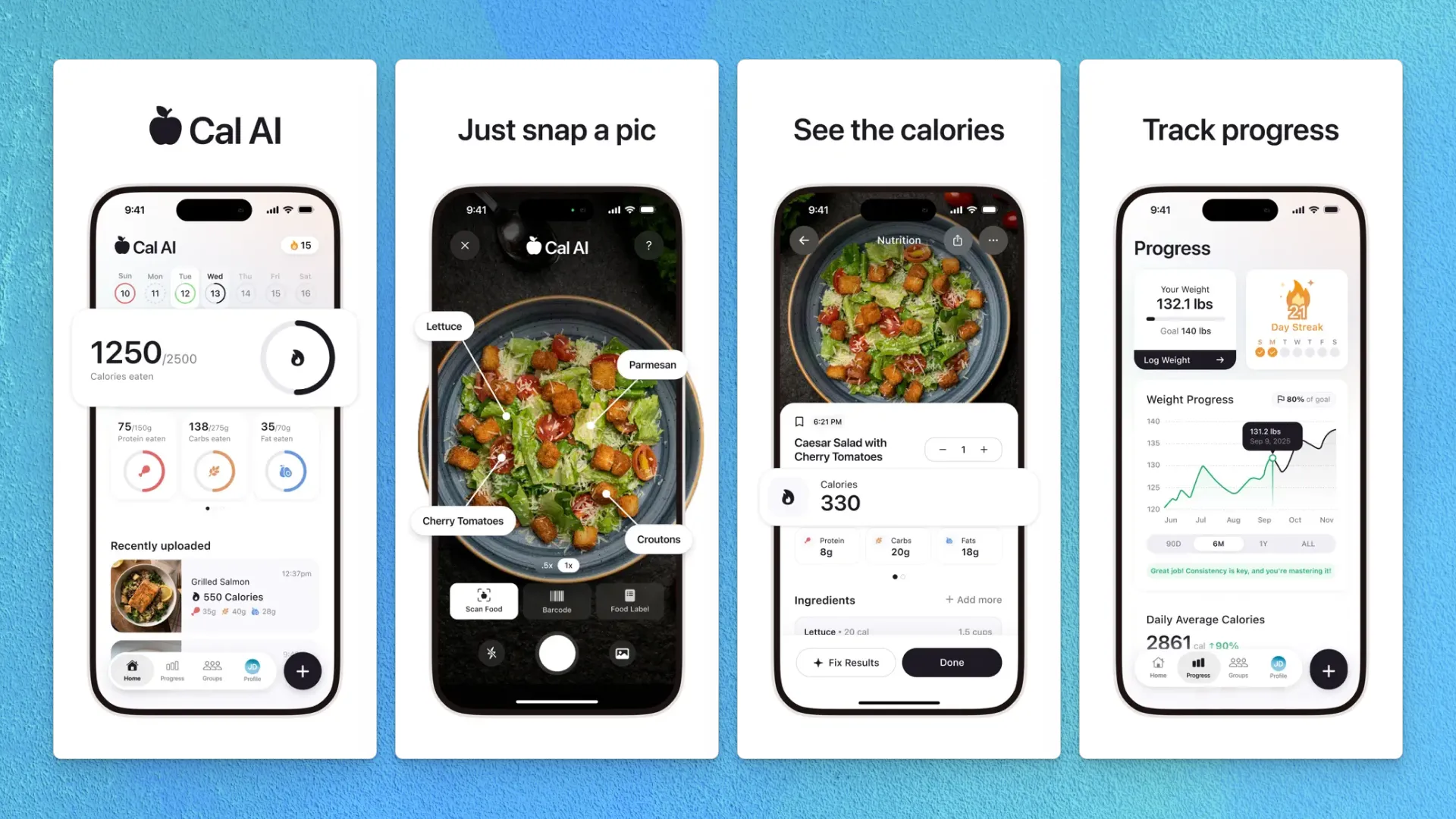
If you've spent any time on TikTok or Instagram over the last two years, you've probably seen Cal AI. The product promise is simple: take a photo of your food and let AI estimate the calories, macros, and nutrition behind it. That removes the manual logging friction that makes traditional calorie tracking hard to sustain.
Cal AI was co-founded by Zach Yadegari and Henry Langmack, alongside Blake Anderson and Jake Castillo. Zach had already been building and selling products for years, so the team showed up with the kind of product pace that usually takes much older companies longer to develop.
The growth curve followed quickly:
- Month 1: $28K in revenue
- Month 2: $115K in revenue
- Within 6 months: $1M in monthly recurring revenue
- Within 18 months: 15M+ downloads and roughly $40M in annual revenue
- March 2026: MyFitnessPal announced its acquisition of Cal AI
That level of demand came from great distribution, especially through short-form video and creator-led acquisition. But installs alone do not create a subscription business. The conversion system behind the product did, and that is where Superwall became part of the story.
Why Paywall Optimization Mattered
Cal AI joined Superwall in March 2024, shortly before its public launch. At that point the team had what most fast-moving subscription apps start with: one onboarding paywall, a few price points, and the assumption that they would improve it over time.
What made Cal AI different was the speed at which the team wanted to learn. They did not view the paywall as a static checkout screen. They treated monetization like a product surface that deserved the same iteration velocity as onboarding, activation, and acquisition.
That meant the traditional approach was too slow. Shipping hard-coded paywall changes, waiting for App Store review, and learning from a single variant at a time would have throttled their pace. They needed a system that made experimentation cheap enough to run constantly across pricing, design, messaging, and placement.
We treat paywalls the same way we treat the product — ship something, measure it, and improve it tomorrow. If you're spending weeks debating what your paywall should look like, you've already lost. Just test it.
— Zach Yadegari, Co-founder, Cal AI
The Experimentation Machine
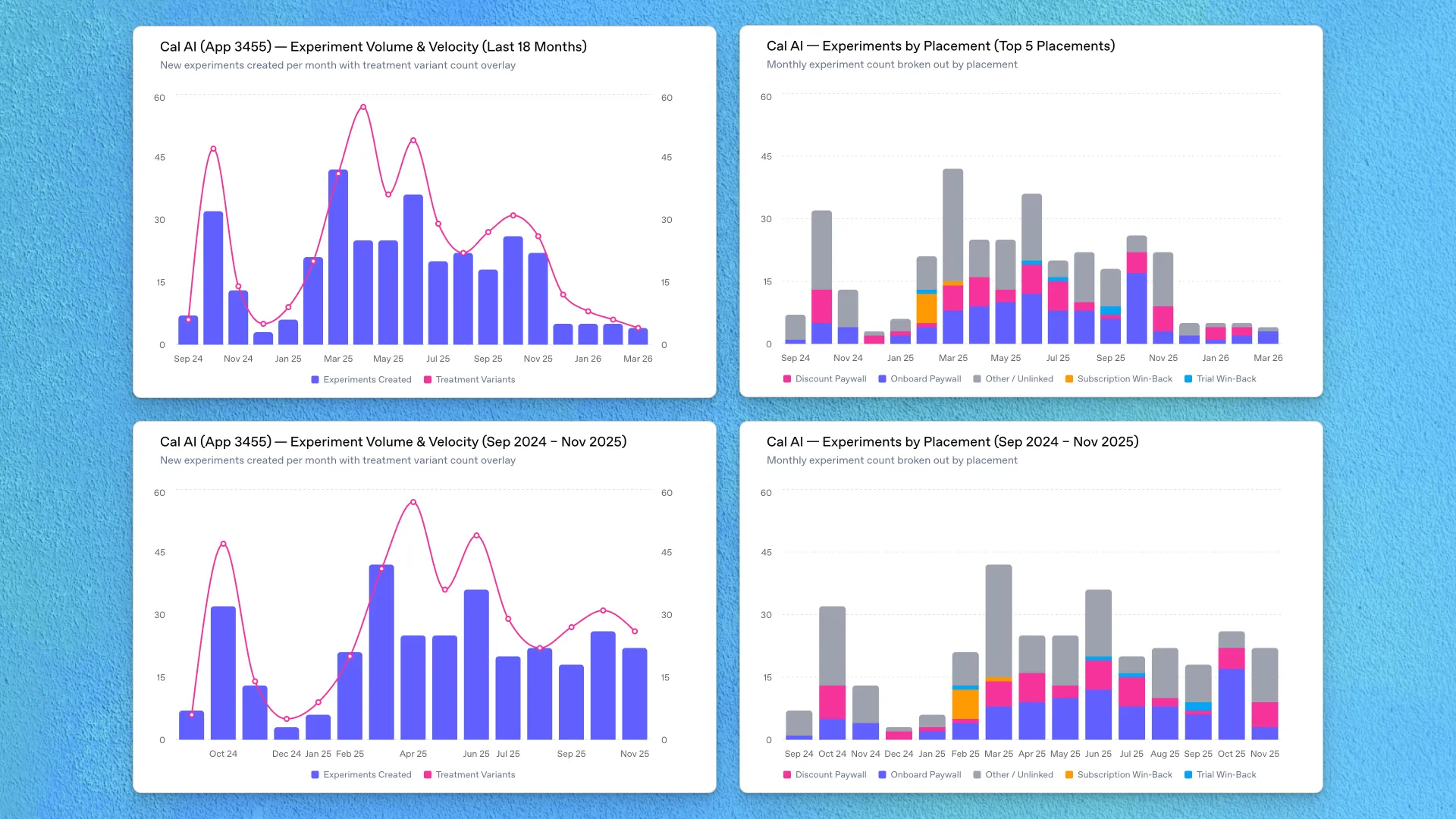
Over the next two years, Cal AI turned monetization into a repeatable testing system.
-
123 A/B experiments on iOS
-
160 unique paywall designs
-
424 total variants tested
-
46 trigger points
That works out to roughly five real experiments per month. Most subscription apps never get close to that pace, and the compounding effect is the whole point.
The Onboarding Obsession: 61 Experiments
Their primary monetization surface, the onboarding paywall, went through 61 meaningful experiments. The team continuously tested layouts, offer framing, pricing presentation, urgency treatments, and creative direction against live traffic. Each iteration produced another signal about what actually moved trial start and paid conversion.
46 Trigger Points: Monetizing Every Moment
While many apps rely on a single onboarding paywall, Cal AI built monetization into the rest of the product lifecycle as well. The team identified dozens of moments where intent was high enough to justify a more tailored conversion prompt. That included:
-
Onboarding: the first high-intent purchase moment for new users
-
Transaction abandon: exit-intent recovery flows when users backed out of checkout
-
Freemium feature gates: moments around camera scan, barcode scan, label scan, macros, analytics, progress photos, and health score features
-
Win-back flows: separate messaging for expired trials, lapsed subscriptions, and reactivation campaigns
-
Lifecycle messaging: paywalls connected to push notifications and email journeys
-
Upsells: family plans, lifetime deals, body scan reports, and nutrition chat add-ons
The takeaway is not just that Cal AI had a lot of paywalls. It is that the team built a much larger testing surface, giving themselves more opportunities to learn and more places to improve revenue.
On a good week I'd launch three or four new variants before lunch. The whole point was to never stop learning — every experiment, even the ones that lost, taught us something about what our users respond to.
— Vahe Baghdasaryan, Growth Lead, Viral Development (Cal AI growth agency)
Creative Paywall Strategies That Worked
Cal AI did not limit experimentation to pricing alone. The team invested in the creative treatment of the paywall itself, testing formats that felt more like product experiences than static purchase screens.
Spin Wheel Gamification
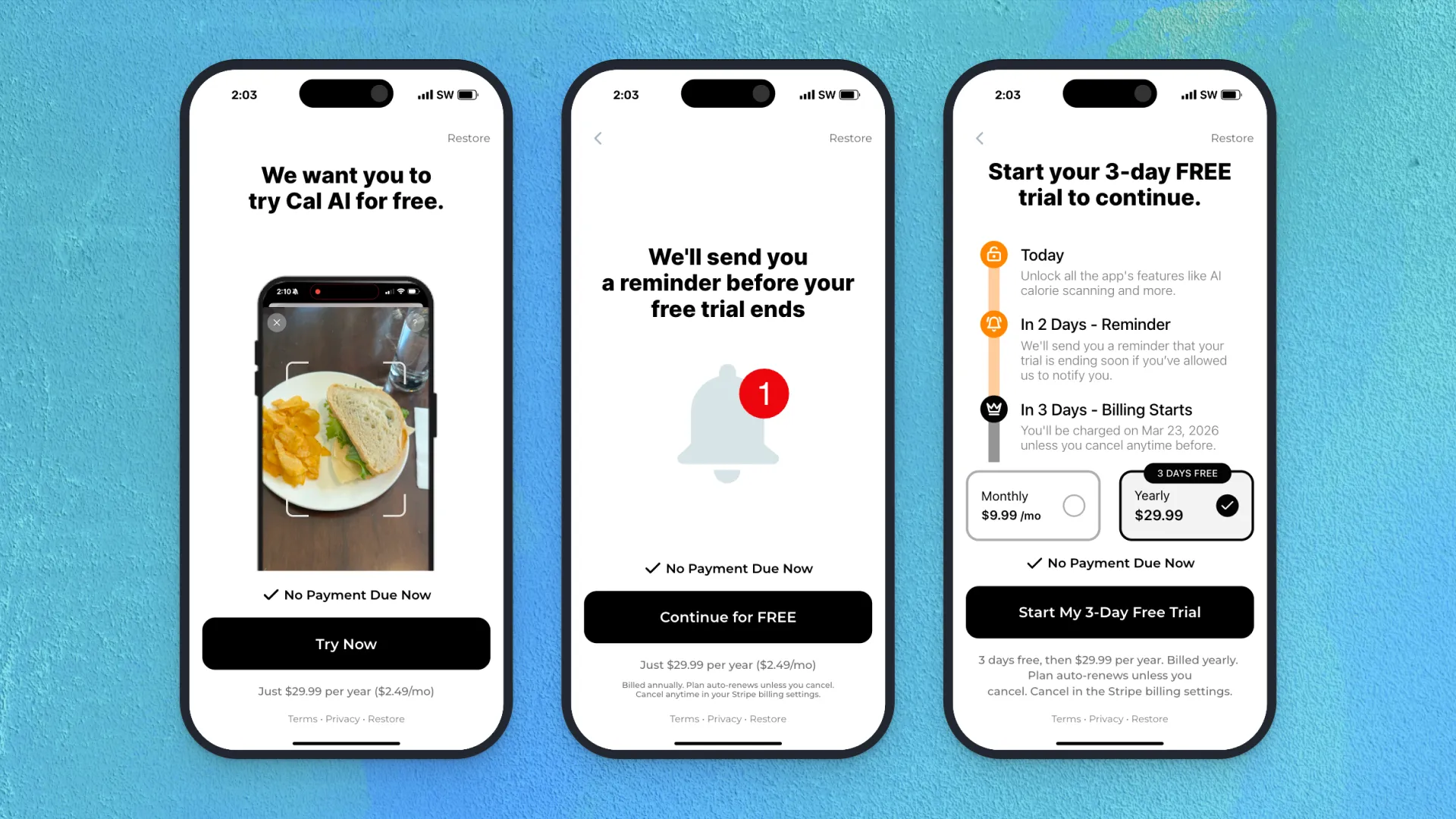
One of their signature formats was a spin-wheel paywall that let users "unlock" a discount. It turned a standard purchase decision into a more dynamic moment, and the team kept iterating on the details: discount framing, urgency, animation, and how aggressively the offer was positioned.
More Than One Way to Convert
The experimentation program also expanded into video paywalls, a much broader matrix of active price points, and web checkout via Stripe. Weekly, monthly, quarterly, annual, and lifetime combinations all became part of the test surface.
That matters because monetization performance is rarely driven by a single variable. Creative, price architecture, billing cadence, trial structure, and checkout destination all interact. Cal AI built a system that let the team test those combinations instead of debating them in the abstract.
The Results
The experimentation program translated into clear monetization gains:
- 3x+ monthly revenue growth — over 3x increase in 10 months
- +31% trial-to-paid conversion — relative improvement over 12 months
- 87% paywall presentation rate — nearly every new user sees a paywall
- 63% transaction completion — of users who start checkout
Conversion funnel efficiency (iOS):
- New users who see a paywall: 87%
- Paywall viewers who start a transaction: 57%
- Started transactions that complete: 63%
About that January spike: when New Year's resolution traffic surged and installs nearly doubled month-over-month, Cal AI's extensively tested paywall funnel was ready. It was compound interest on over a hundred small optimizations paying off at the exact right moment.
Most teams I work with run a few experiments and then settle on a winner. Cal AI never settled. They'd find a winning variant and immediately start testing against it. That relentlessness is why their numbers kept compounding month after month.
— Nick Godwin, Growth Manager, Superwall
What Other Apps Can Learn from Cal AI
-
Experiment like revenue depends on it. Small weekly improvements compound into outsized revenue growth when the team keeps shipping and measuring.
-
Do not limit monetization to onboarding. Checkout abandonment, premium feature access, lifecycle reactivation, and upsells are all legitimate conversion moments.
-
Treat paywalls as a creative surface. Messaging, motion, and visual framing can change how a product pitch feels.
-
Speed beats perfect theory. Cal AI did not wait for the perfect paywall. The team shipped, measured, and iterated fast enough to learn from real users.
-
Give users more than one way to pay. Expanding beyond the default App Store flow opened another revenue channel and reduced unnecessary checkout friction.
Cal AI's story is a reminder that the best monetization strategy isn't one perfect paywall — it's a team committed to learning, iterating, and compounding small wins over time.
If you're building a subscription app and wondering where to start, start with your first experiment. The compounding takes care of the rest.
 Ahead App
  BuyBye
  Forms App