
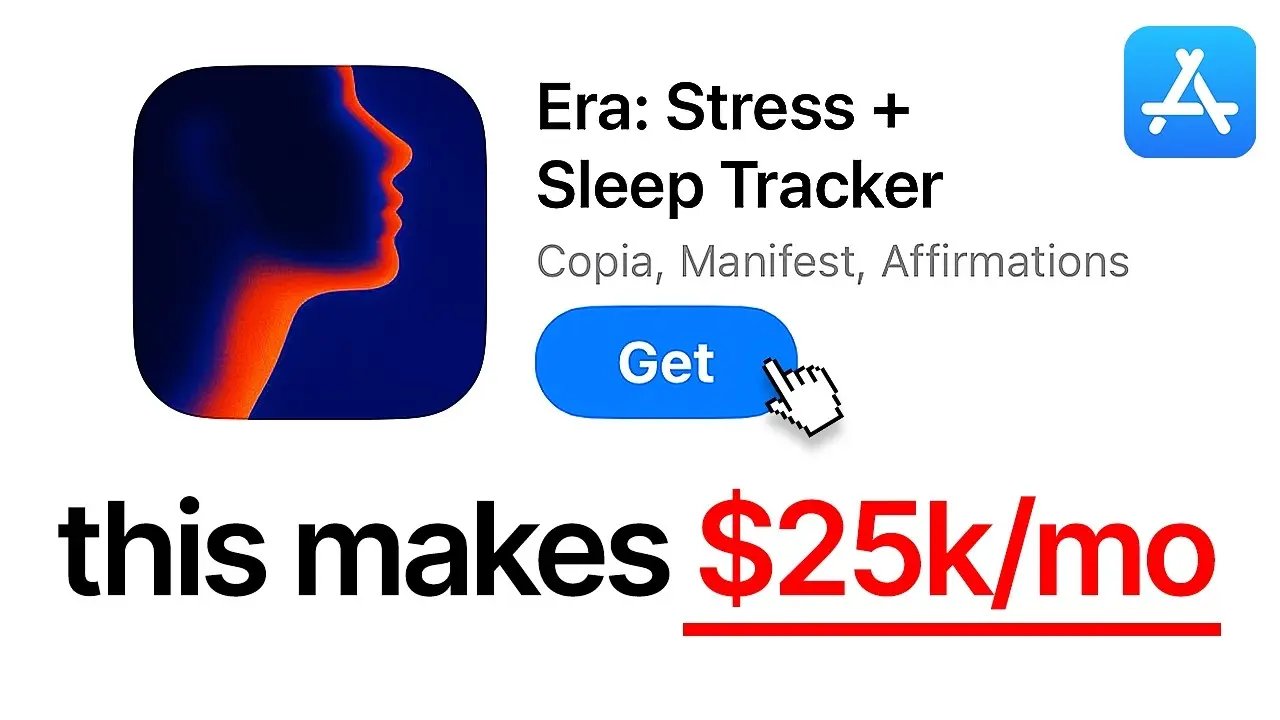

How Phoenix Hit 100K Downloads and $25K MRR With One Viral Format
Building a consumer app to 100,000 downloads isn't something most founders pull off in their first attempt. Most struggle to crack 10K, burn through their marketing budget on ads that don't convert, or worse—build something nobody wants. But Phoenix Do (yes, the guy who literally pretended to be the Astronomer CEO's daughter to market his app) cracked the code on viral growth in the manifesting space, hitting $25K MRR along the way.
In today's podcast interview recap, we'll break down his exact playbook. Phoenix has built multiple apps in the self-help and manifesting niche, and he's brutally honest about what works versus what's just noise. His approach to UGC, creator partnerships, and funnel optimization is surgical.
Our host, Joseph, covered a ton of ground with Phoenix. As always, if you haven't seen the interview yet, definitely check that out right here. For now, on to the recap:
The 10 million view video that changed everything
Phoenix's breakthrough came from a single Instagram video featuring his co-founder Chloe. One video. 10 million views. "Once we had that, we knew we had something," he explained.
The format was deceptively simple: a hook about repeating affirmations before a specific date, followed by a demo of the app showing those exact affirmations. But here's the kicker—most of their early videos didn't even show the app properly. One of their biggest videos (6.6 million views) barely mentioned the product at all.
"I remember very specifically I told Chloe after that video popped off, 'Chloe, you forgot to do the hook and demo. We got like 20-30% less downloads than we could have,'" Phoenix said. That one mistake cost them thousands of downloads. But it taught them something critical: the format matters, but execution matters more.
The winning formula? Start with a time-sensitive hook ("If you're seeing this before May 7th..."), deliver value through affirmations or exercises, and casually mention the app name as if everyone already knows about it. Chloe would say "These are the affirmations from Copia," and curious viewers would flood the comments asking what Copia was. That curiosity drove traffic to their bio link and eventually to the app store.
The manifesting niche nobody was monetizing
Phoenix didn't stumble into the manifesting space by accident. He was actively hunting for viral formats on TikTok when he noticed a trend: girls using ChatGPT to generate "a day in your dream life" stories and posting emotional reactions.
"I saw girls crying. I was like, yeah, that could probably be an app within itself," he explained. These weren't just vanity posts—they were getting 10-20 million views. People were desperate for the prompt in the comments. The emotional hook was undeniable.
The insight? People were already doing this behavior on ChatGPT for free and posting about it organically. They just needed someone to package it into a repeatable, mobile-first experience. "It's almost like a form of open therapy," Phoenix noted. Users would share their struggles—breakups, anxiety, career stress—and the AI would paint a picture of their ideal future. That emotional release was the magic moment.
The genius move was studying creators who were already monetizing in this space. Phoenix found Sarah Pearl, a manifesting creator with 2.5 million TikTok followers who'd been posting the same format for years. She sold books and courses using the exact hook structure Phoenix later adapted: "Repeat these affirmations for the next 7 days."
"She sold like 100,000 copies of her book literally just saying repeat these affirmations," Phoenix said. If it worked for a book, it could definitely work for a subscription app.
Building trust through onboarding (and doubling conversions)
Early on, Phoenix's funnel had a problem. About 50-55% of users were hitting the paywall, but then dropping off. The conversion from paywall to trial was decent at 15-20%, but half of potential users never even got that far.
The issue? Trust. Or lack of it.
"Everyone dropped off because we didn't build enough trust in our onboarding," Phoenix explained. The initial flow was brutally simple: login, enter your name, type your goals. Done. But asking users to immediately type a paragraph about their dreams without context felt invasive.
The fix came from studying the best apps in the world and expanding the onboarding sequence. They added:
Social proof: Simple text like "proven methods, meaningful results" established credibility without making outrageous claims
Progressive questions: Instead of one big text box, they broke it into bite-sized, tappable options
Onboarding video: A short clip explaining the app's value proposition upfront
The result? Conversion jumped from 50-60% to 85-90%. "Just a couple questions to better understand your customer and make that experience feel personal doubled our conversion," Phoenix said.
The design philosophy was simple: treat onboarding like TikTok captions. "You don't put more than five words on each screen. You switch to the next frame," he explained. Users have TikTok brain now. Nobody's reading paragraphs anymore.
The hard truth about hard paywalls
Phoenix has a hot take about paywalls, and he's not shy about it: "If you do a hard paywall, it's honestly because your app is ass."
His reasoning? Apps that provide genuine ongoing value—like Strava or Duolingo—don't need to lock users out immediately. They let people get hooked first, build the habit, and then naturally upgrade when they want more.
"Strava gives you a free trial and you get entrenched. Eventually you have this emotional trigger where it's like, 'I probably should pay for Strava Premium,'" he explained. The key is building enough product value that users feel the pain of not upgrading, rather than forcing them to pay before they experience any value.
The problem with most hard paywalls? They're compensating for a product that doesn't have real retention hooks. "You lose the ability to actually build an app that people stay on. Without that, you can't do a premium model," Phoenix noted.
His framework is simple: get users to take a simple action (external trigger), give them a variable reward (the slot machine effect), and over time build investment through data and personalization. If you skip the investment part, you're just churning through users with top-of-funnel traffic. That might get you to 100K downloads, but it won't build a billion-dollar company.
Scaling to 40 creators without losing quality
Once Phoenix had a winning format, the next challenge was scaling it. Going from one viral video to a repeatable content engine meant working with dozens of creators simultaneously.
His strategy? Target the sweet spot: creators with 50K-250K followers.
"You have to start smaller because you have an unproven product," he explained. "When you target people with a million followers, they have a brand to maintain. If your product isn't there yet—and it usually isn't in your first 2-3 months—you need creators who are hungry."
These mid-tier creators weren't getting regular brand deals. Many still worked part-time jobs. That made them more receptive to partnerships and willing to stick to guidelines. Phoenix aimed for about $1 CPM as a baseline, then optimized from there.
To manage 40 creators at once, he used platforms like Sideshift (a UGC marketplace) to quickly hire vetted talent. "That got us about 10-20 people that were really good," he said. From there, it was about maintaining clear creative guidelines while still allowing room for personality.
The core elements stayed consistent: hook, demo, call-to-action. But creators could add their own flair. The key was AB testing constantly to find which hooks resonated most with their specific audience.
The "crash out" experiment that got 13 million views
Not every winning format is obvious from day one. Sometimes the best ideas come from random experimentation.
Phoenix and Chloe were making standard manifesting content when one day Chloe posted a rant video. A friend joked that she should "stop crashing out," and it triggered something. Phoenix realized "crashing out" (getting irrationally angry or emotional) was having a viral moment online.
Justin Bieber had just gone viral with his "Is it not clocking to you, bro?" rant. The concept was everywhere. Phoenix saw the opportunity.
"We invented this crash out button—a really big red button—and you click 'crash out now' and it gives you a breathing exercise," he explained. They made a simple slideshow video showing the feature. It got 12 million views.
Even better? It was a literal slideshow. Two frames. Text overlay. No fancy production. "If it was a 15 million view video with a proper hook and demo, it probably would have gotten 30-40K downloads," Phoenix admitted. Even without perfect execution, they pulled 10-15K downloads from that one video.
The lesson? Tap into what's already viral in culture, then find a way to make your app relevant to it. Don't force virality—remix it.
Why conversion rates matter more than views
Here's where most founders mess up: they see millions of views and assume they've made it. Phoenix learned the hard way that views mean nothing without conversion.
Case in point: that infamous stunt where Phoenix pretended to be the Astronomer CEO's daughter to promote the app. The video got 5 million views. It generated buzz. But the conversion rate? Terrible.
"That video had 5 million views but only drove a couple thousand downloads. There wasn't a clear demo," he explained. People watched for the drama, not for the product. Without a proper hook-and-demo structure, viral content is just entertainment—not a funnel.
The takeaway? View-to-download rate matters more than raw views. A well-executed video with 200K views and a 10% conversion rate will outperform a 5 million view video with 0.1% conversion every single time.
Phoenix's best-performing content consistently hit around 10% view-to-download rates by nailing three things:
Clear hook that creates curiosity
Demo showing the app in action
Frictionless path to download (bio link, ManyChat automation, etc.)
The e-commerce playbook nobody's using for apps
One of Phoenix's most contrarian takes? App founders need to study e-commerce marketers, not other app builders.
"Everyone's looking at e-commerce methods and models. Show a product that provides some magic moment in front of your consumers, then build enough interest in the comments to boost engagement," he explained. The principles that work for selling physical products on TikTok Shop translate perfectly to apps.
He pointed to creators like DC Midas who tweet "insane alpha" about what goes viral in different demographics. "Go to your mom's Facebook page and you'll see ads that crush for 45+ audiences," Phoenix said. Understanding platform dynamics and audience psychology at that level is what separates long-lasting marketers from one-hit wonders.
The edge in e-commerce—especially affiliate e-commerce—is pure marketing. When you're selling a commodity product, your only advantage is better ROAS through smarter creative. That same mindset applies to apps.
"In e-commerce, if you're all bidding for the same CPM with the same format, it's just going to skyrocket. Your ability to innovate and target new channels and audiences is what makes a really good marketer," Phoenix noted.
Building for retention, not just downloads
Phoenix is clear-eyed about what it takes to scale past 100K downloads. Top-of-funnel viral content can get you there. But if you want to build something that lasts—something with real enterprise or exit value—you need retention.
"The easiest path to 100K: trigger, action, variable reward. If you want to go bigger and build a retentive app people keep coming back to, you need to figure out the investment part," he said.
His framework for thinking about this comes from the hook model: external trigger (what gets users to open the app), action (what they do inside it), variable reward (the dopamine hit), and investment (what keeps them coming back).
For Copia, the investment piece evolved beyond just affirmations. Phoenix started thinking about building "the Strava for stress and mental health." Users would naturally generate data (heart rate, walks, stress patterns), and the app would use LLMs to surface personalized insights.
"What's recently ubiquitous is people having access to their own data. What's newly possible is LLMs making sense of that data without hardcoding everything," he explained. That intersection—ubiquitous behavior meets newly possible technology—is where billion-dollar products get built.
Practical advice for founders starting today
If you're building a consumer app right now, here's Phoenix's playbook:
Start with validation, not code. Find a viral trend or behavior people are already doing (like the ChatGPT manifesting trend). If millions of people are organically posting about something, there's probably an app in there.
Master one format before scaling. Phoenix tested dozens of video styles before finding one that consistently converted. Once you have that, replicate it obsessively. "Focus on dominating one channel. Your focus will be off the charts if you try multiple at once," he warned.
Target 50K-250K follower creators. They're hungry, affordable, and authentic. You'll get better ROAS than going after mega influencers who charge premium rates and can't deliver the same genuine connection with their audience.
Optimize for conversion rate, not views. A 10% view-to-download rate on 100K views beats a 1% rate on 1 million views. Always. Focus on hook-and-demo execution, not vanity metrics.
Build trust in onboarding. Add social proof, progressive questions, and video explanations. Users need to feel confident before you ask them for anything—especially personal goals and dreams.
Test paywalls thoughtfully. Free trials work better than hard paywalls for most consumer apps. Let people get hooked on the value before asking them to pay.
Wrapping up
Phoenix's success with Copia isn't about one viral stunt or a lucky video. It's about systematically understanding what makes content viral, optimizing every step of the funnel, and building genuine product value that keeps people coming back.
"If you're building a consumer app, this is the model you should think about. Top of funnel: creators, posts, views, impressions. Get a good CPM. Then nail your app store conversion. From there, AB test your onboarding and paywall. If you master that, you can probably make $100K a month," Phoenix said.
But the real trick? Building retention. "What does your app look like when there's nothing? When there's something? When there's a lot of things?" he asked. That feedback loop—where users take action, get rewarded, and invest more over time—is what separates viral flashes from enduring products.
The tactics might change. Maybe it's affirmations today, crash out buttons tomorrow, or something entirely new next month. But the fundamentals stay the same: find a behavior people already do, package it into a mobile-first experience that feels personal, and build enough trust that they'll pay for it.
As always, if you're ready to test your paywall, run price tests and more for your app, then you're already in the right spot. Sign up for a free Superwall account today!