Today, Nick hosted our Superwall Ships! webinar, where we covered recently released features in Superwall. This one was a bit different. We focused on three things:
What happened in the mobile world at-large in 2025.
What we saw work in our experiments over the year.
And, of course, what we shipped across 2025.
Here, I'd love to touch on some highlights. Think of it like our Spotify Wrapped, but for Superwall! Since we have a lot here, I'm going to do my best to summarize each "thing" in just a sentence or two.
Prefer to watch the whole thing? I've got you covered right here (or check out the slides):
What happened in mobile in 2025?
This year, a lot happened in our industry. Court rulings changed how business can, quite literally, be done now in the United States. More apps than ever are being built and shipped, and the way they are marketed to the masses has seen many new patterns and shifts.
April ruling: In April, a court ruling blew open the doors to do business outside of the App Store in iOS apps. This currently applies to the United States.
October ruling: Similar to the above, the same conclusion was drawn with Google in court. Now, since October, you can complete transactions outside of Google Play and its APIs in the United States too.
AI: This year, vibecoding took off. Not only are new and experienced developers using AI to code, but the rise of autonomous coding agents occurred too. This landscape continues to evolve quickly.
UGC: User generated content was, and still is, a massive topic in marketing and user acquisition. So many are using it to get massive install numbers, but it's tough to get started with and perfect.
What worked in conversion trends
Superwall supports any kind of experiment for mobile apps. With our enterprise customers, we conduct, recommend, and create experiments with them to grow their revenue. Across hundreds of different tests, here are some things we saw work particularly well:
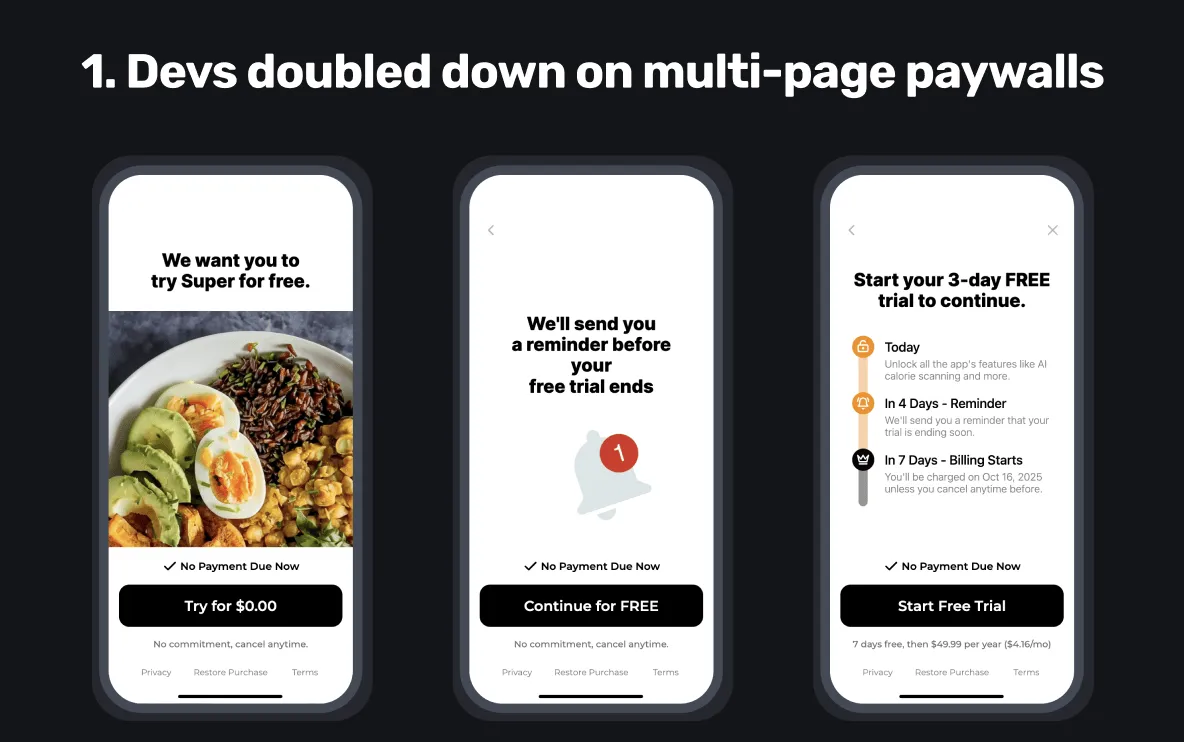
Multi-page paywalls continue to work: These paywalls tend to work well since they can tell a story, prime users for conversions, or ease trial anxiety using trial reminders.
Purchase page design tests: We've moved on from simply using the "three bullet point feature list" design. While it can certainly still work, taking some more swings at the purchase page worked well.
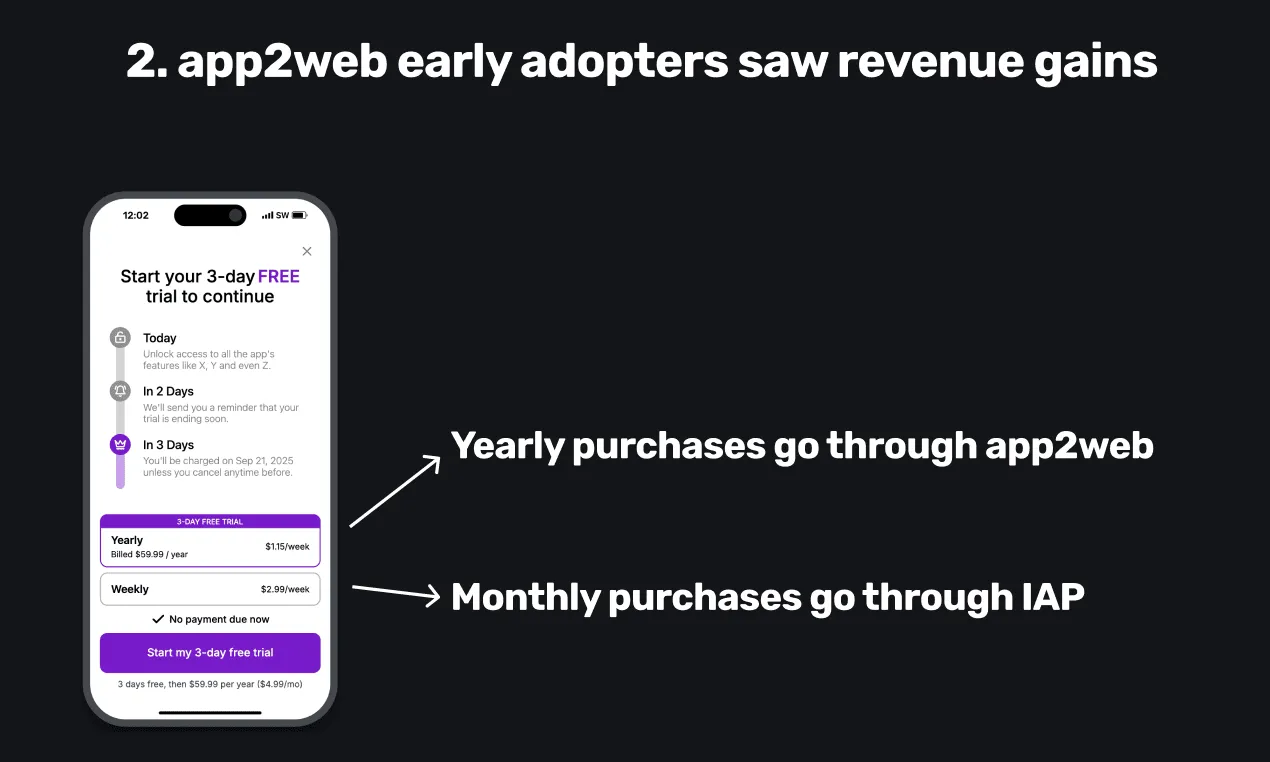
App to Web: Checking out in web increased revenue for some customers, but generally decreased initial conversion rates. Superwall was the first to report on real data here, too.
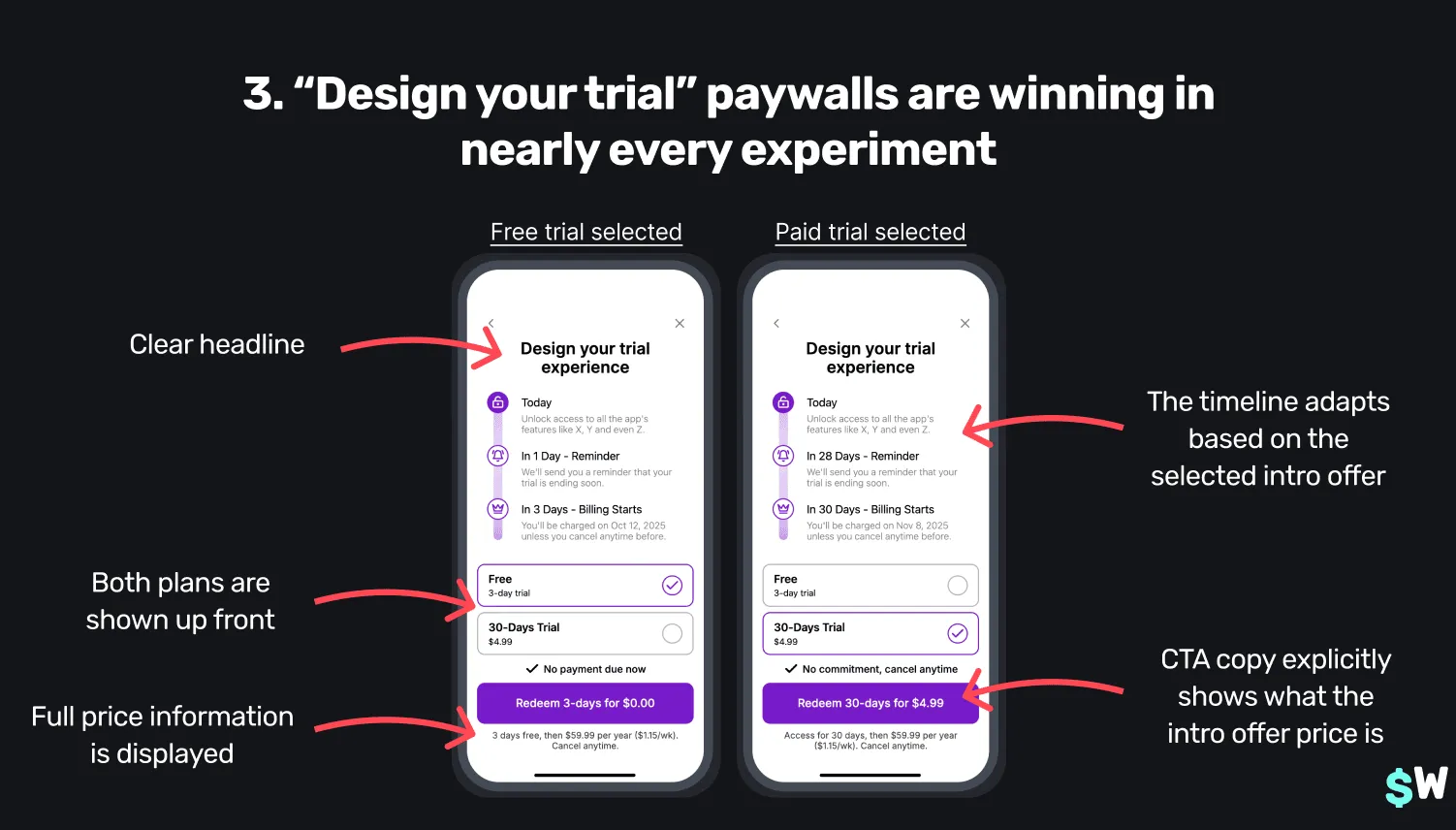
Design your trial paywalls: In our tests, these are winning nearly every single time. One hypothesis as to why? It gives users control over something they've not previously had control over — the terms of the trial.
Price personalization: Using data points available to you to present particular products continues to be a powerful conversion booster. Whether you show an offer based on what happened during onboarding, or use device tier information, or user metadata — collating it together to inform which products you offer worked well for us.
Marquee product updates
Superwall's engineering team shipped hundreds of new features over the year, but here are some of the most impactful ones. Of course, the court rulings changed our roadmap early on. But, that's what is great about Superwall — we were able to respond, pivot to the ruling, and ship things fast. Beyond that, there are tons of new additions we rolled out, have a look:
Payments
Web to App: First, we shipped our web checkout links. All of the Superwall features you care about – paywall experiments, powerful tests, audience filtering, and more — all packaged in a web format that supports "authless" flows.
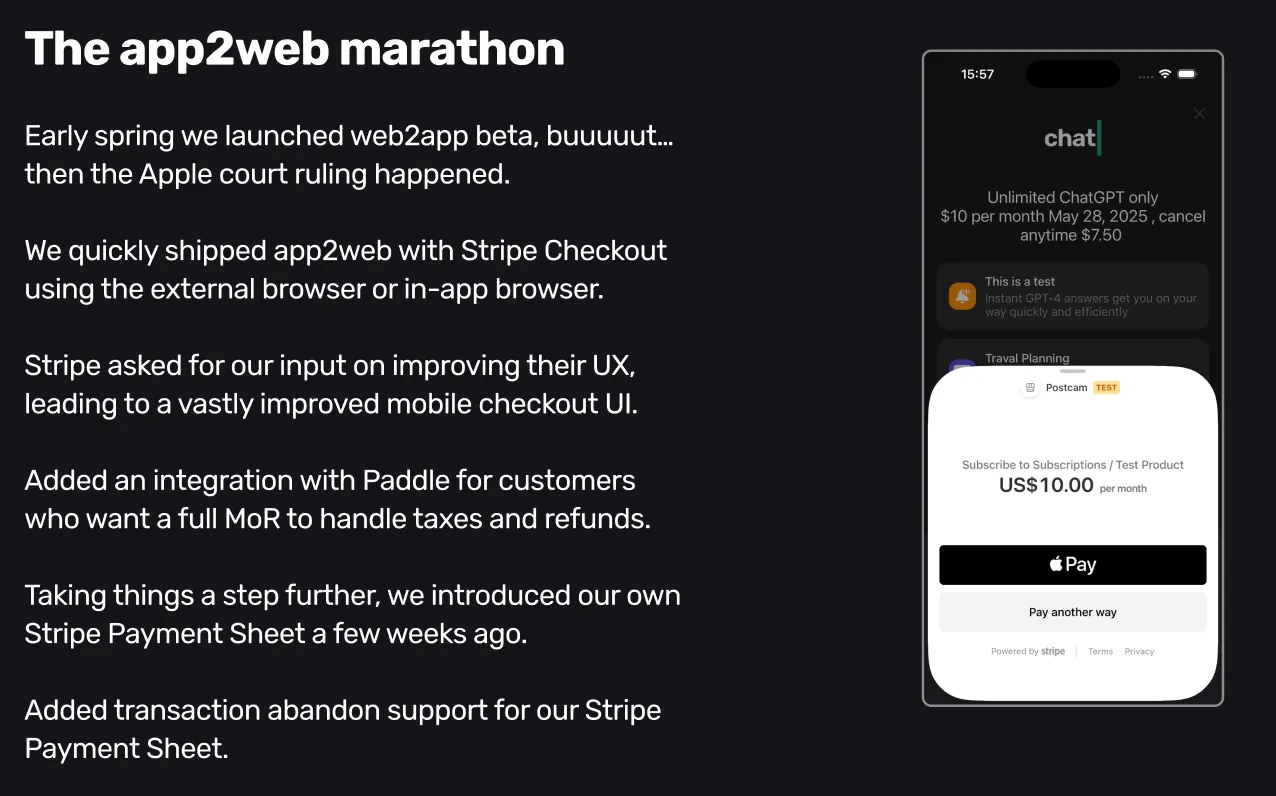
App to Web: Then, we focused on app to web flows. Being able to "link out" from the App Store was step one, and it opened up so many new possibilities for mobile apps.
Stripe payment sheet: Generally speaking, web checkout meant lower conversions but higher revenue. Our design input on the Stripe payment sheet, and how it feels more at-home on mobile, meant that the initial impact on conversions was lessened.
Transaction abandon support with Stripe Payment sheet: Superwall helped pioneer transaction abandoned campaigns, and we brought that same capability over to the Stripe payment sheet.
Paddle support: Stripe wasn't the only web checkout vendor we partnered with. We've also built support to use Paddle as well.
Paywall Additions
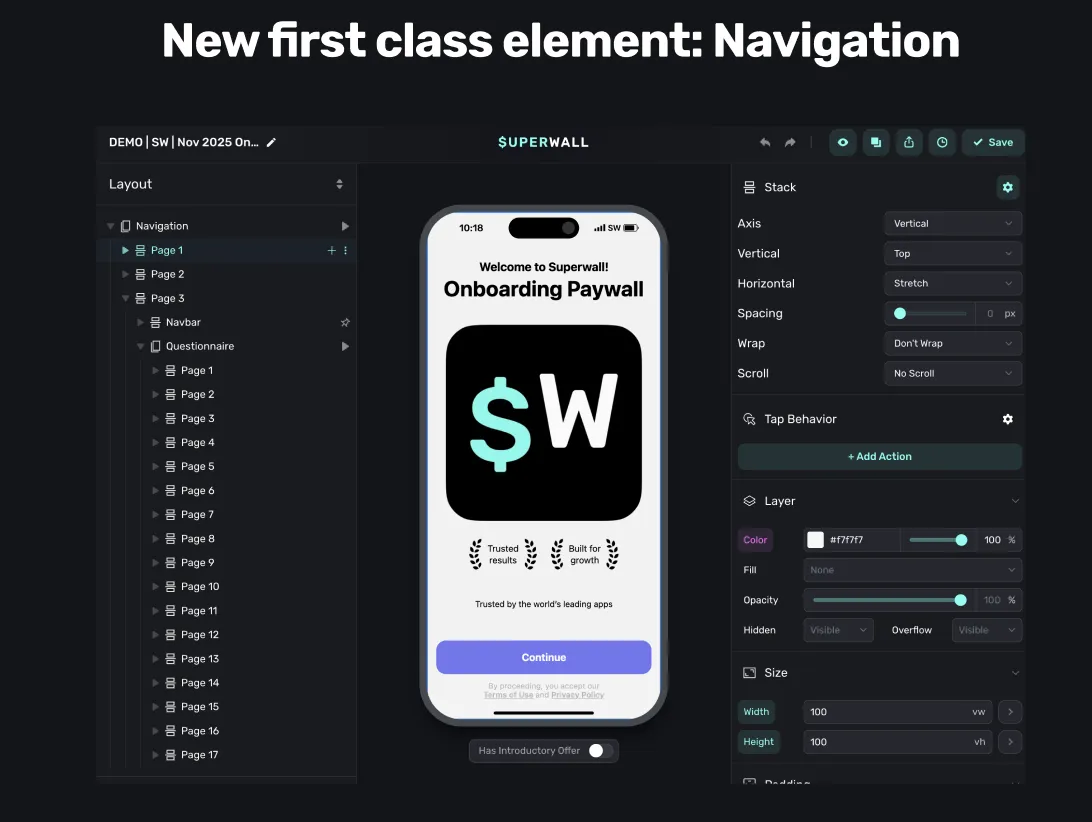
Navigation element: Navigation elements are a powerful component in our editor. They allow for onboarding flows, multi-page paywalls, and more.
Slides: Our slides element lets you add configurable carousels, along with progress indicators.
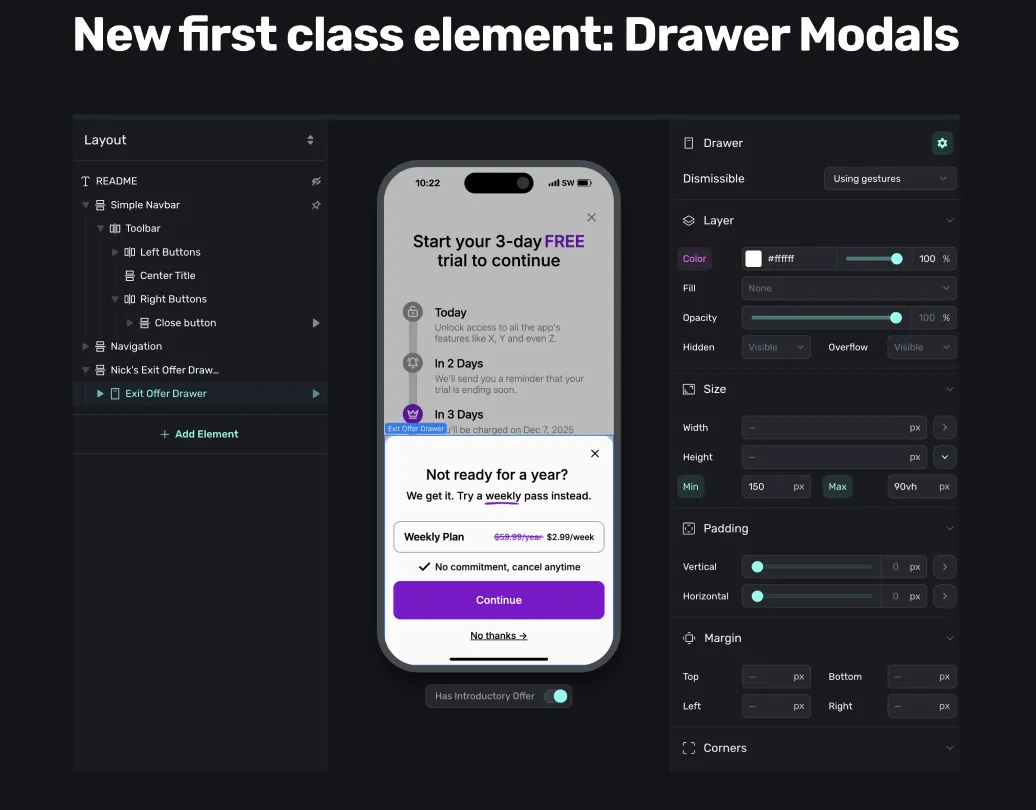
Drawer modals: We shipped a drawer component that feels buttery smooth and native. It's great for things like exit offers, revealing more products, and other similar interactions.
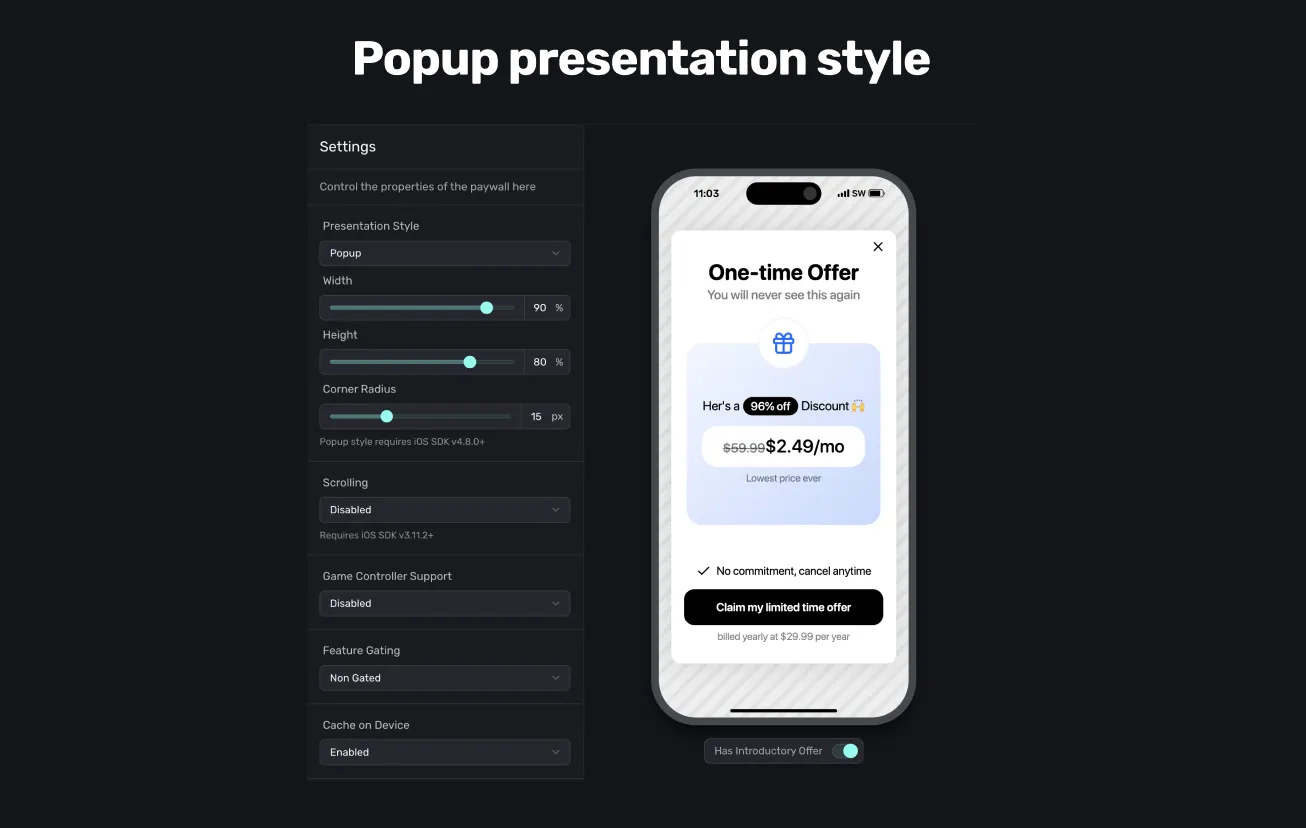
Popup presentation: Popups are amazing for things like one-time offers, or any attention-grabbing news. It doesn't take people away from what they're doing, are highly viewable, and easily dismissed.
AI Localization: Our AI localization feature means that you can support 100s of languages with minimal effort.
Rating request prompt: Now, you can ask for a rating or written review from any paywall. It's as easy as adding it as a tap behavior.
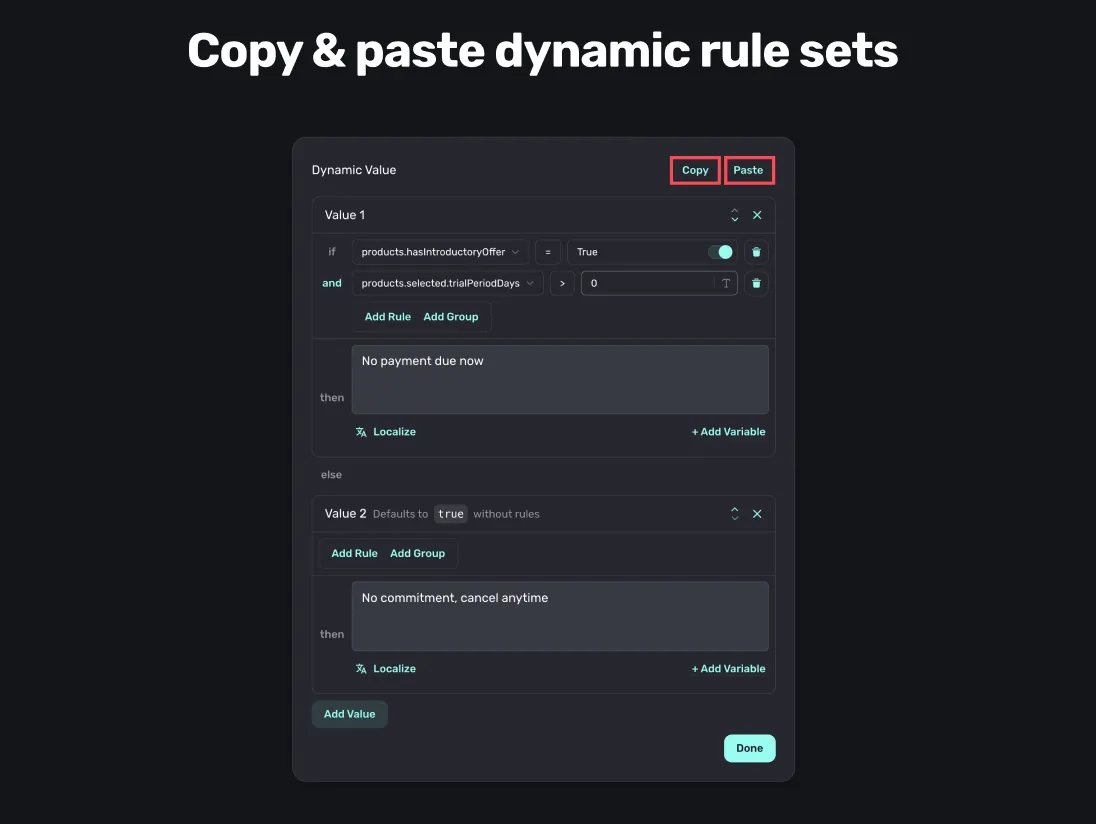
Copy and paste dynamic rules: Most who use Superwall end up creating several paywalls. Along with them, similar sets of dynamic values are made to change copy, images, or elements based on a set of rules (like trial eligibility). It used to be tedious to copy these common rules across paywalls, but now you can copy and paste them.
Campaigns
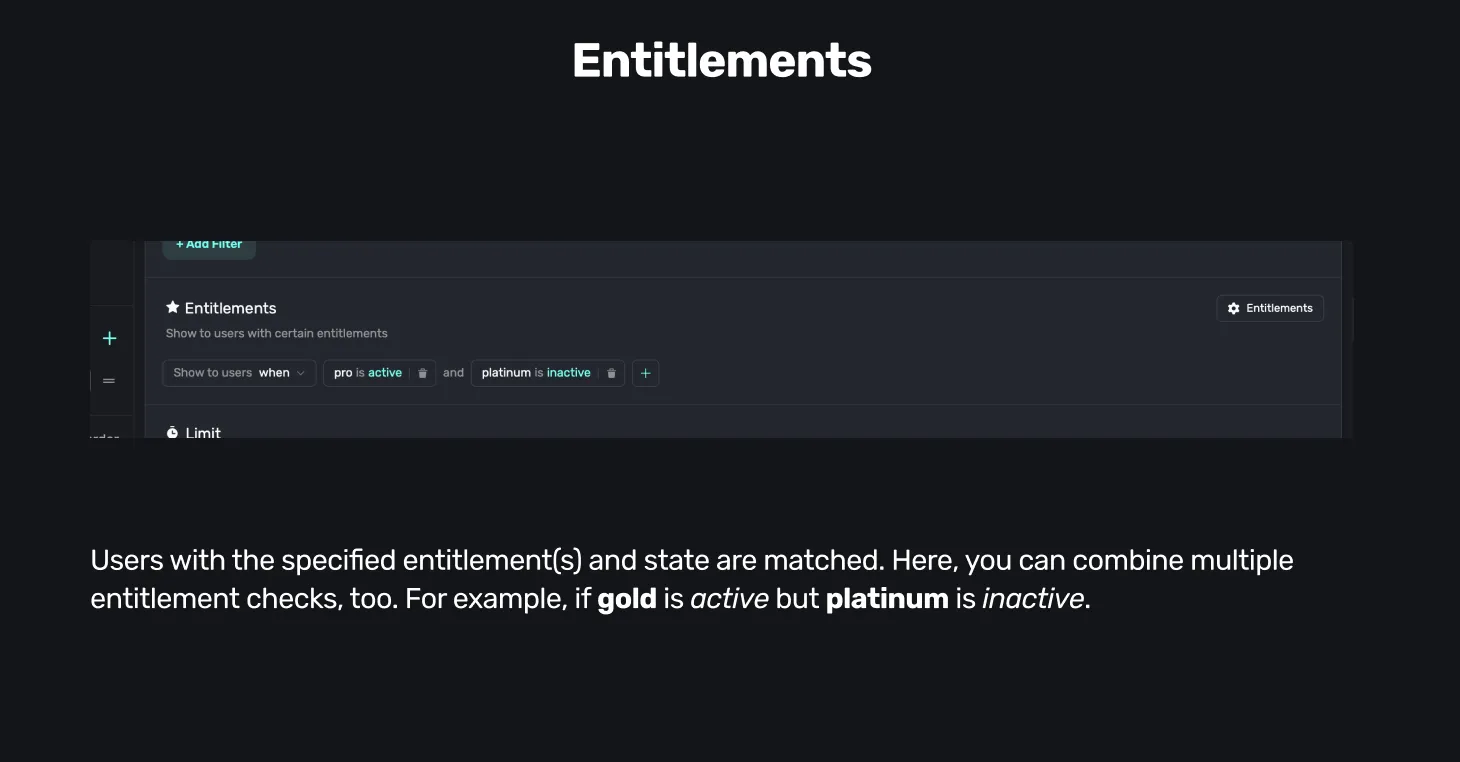
Easily match based on entitlements: With our launch of entitlements, we made it simple to support upgrades, downgrades, and crossgrades.
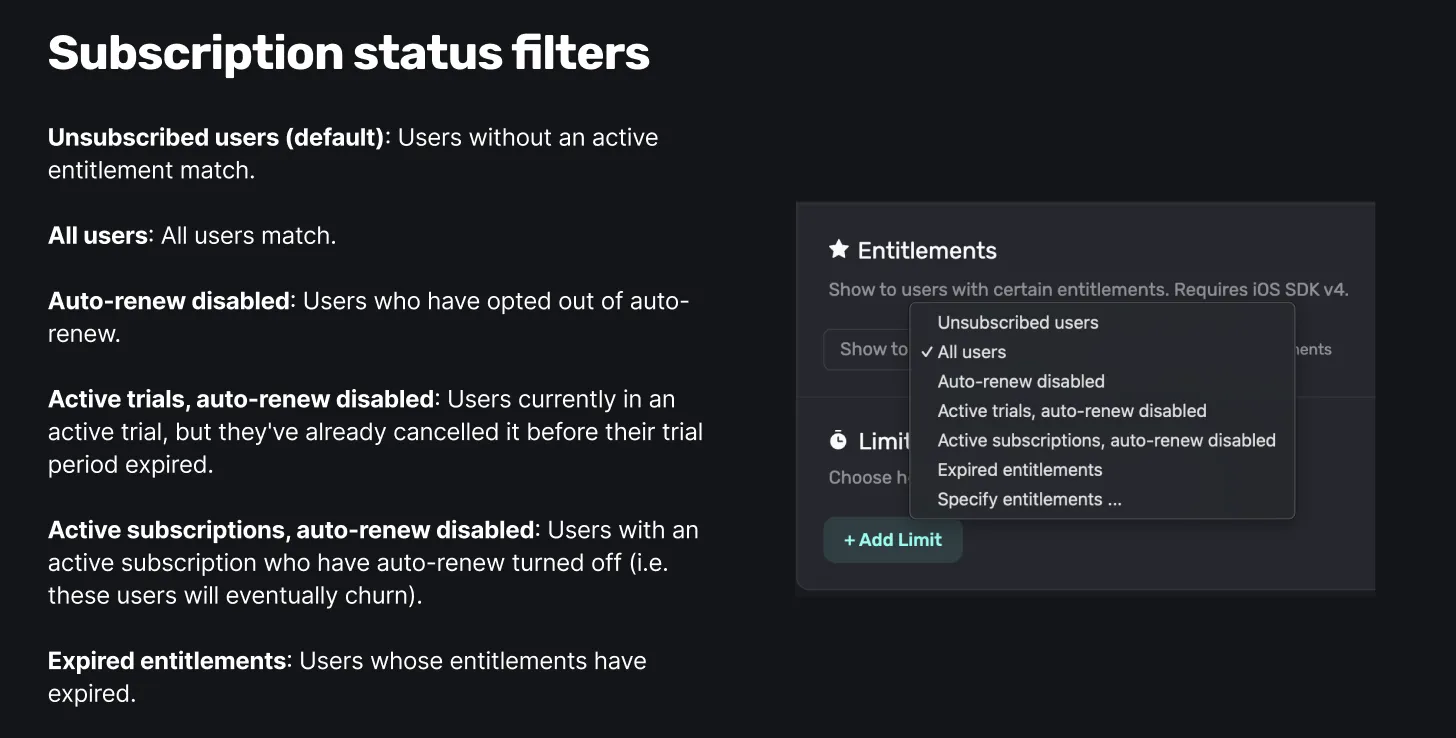
Subscription status filters: This is one of my personal favorites. We made it trivial to target any kind of user. Whether they started a trial and canceled it, have auto-renew disabled, and more.
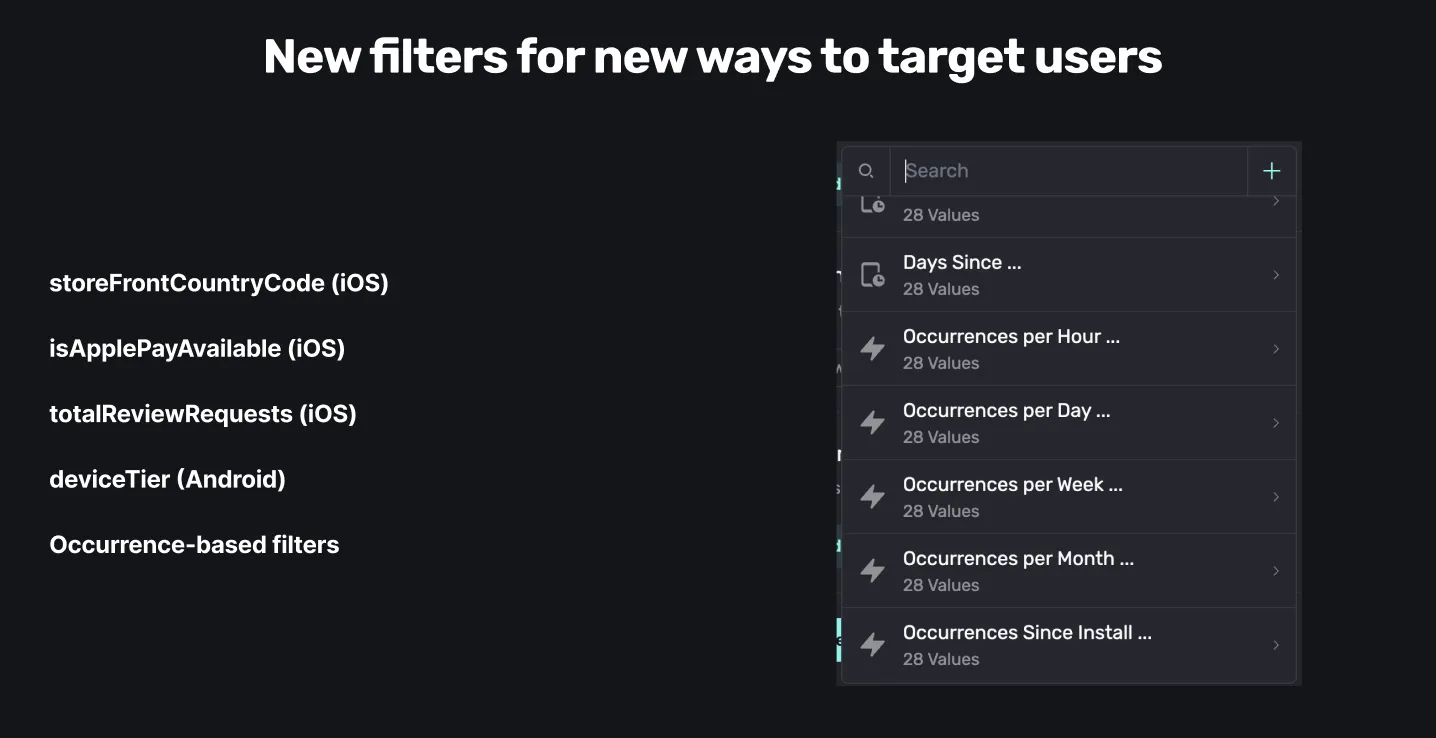
New filters: We added new filters that check the device tier, country code, and more.
Occurrence based filters: We also added new "occurrence" based filters that trigger when a certain number of actions have occurred. Things like how many times a placement fired, and per hour, day, week, etc.
Charts
New revenue charts: We introduced several new charts such as ARPU, MRR, LTV, auto renew, and ARR. All for free.
Many more filters and breakdowns: Charts can now be segmented by several different properties, user metadata, and more.
Android revenue tracking: And yes, we fully support Android in these charts (and revenue tracking in general).
Integrations
Webhooks: We shipped webhooks, which makes it easy to manage your own server logic, be informed of Superwall events, and generally have full insight into anything that occurs in your app.
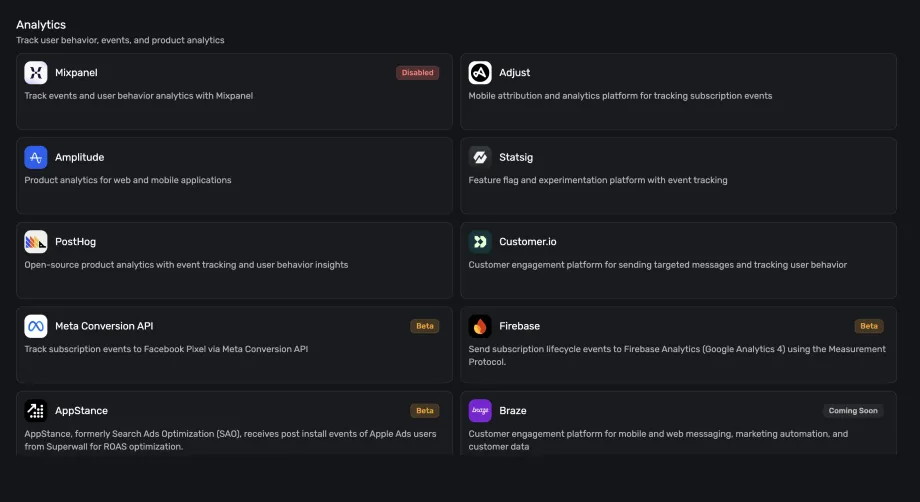
Tons of analytics: At the same time, we've added several analytics integrations such as Mixpanel, Adjust, and several others.
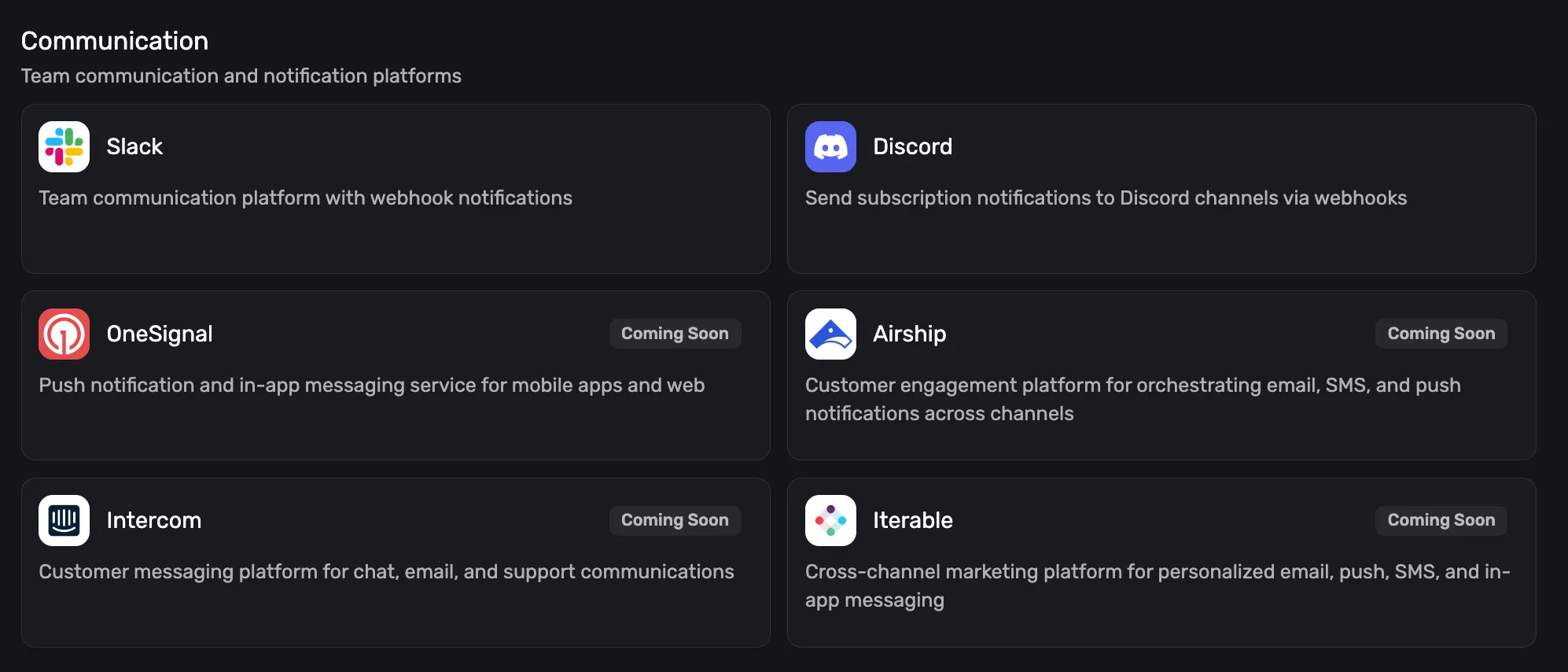
Plus, communications pipelines: We rounded out our robust integrations support with several options to interface with popular communication tools. Who doesn't love getting a Slack ping when a conversion happens?
Quality of Life
Refund protection: We rolled out refund protection, allowing you to be in full control of how refund requests should be handled. That, and a refund rate chart to go with it.
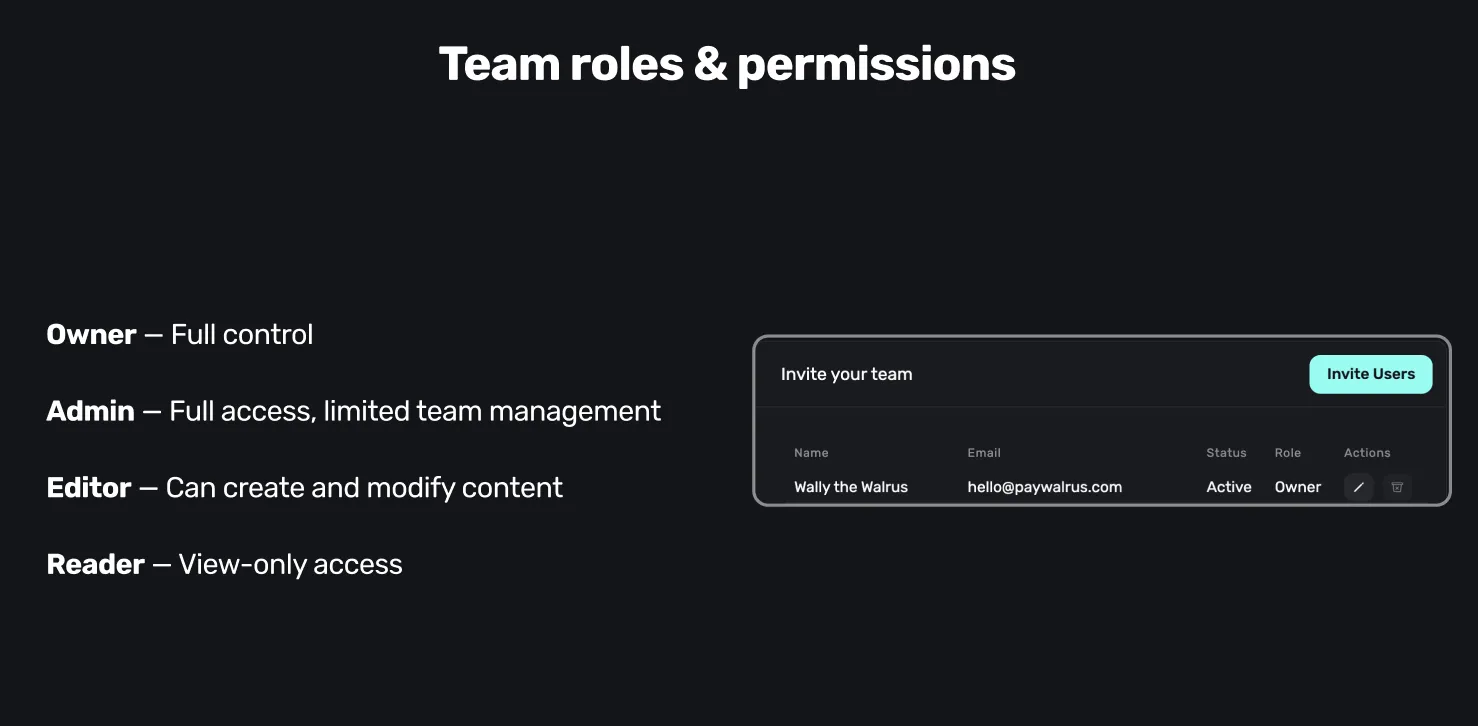
Team roles and permissions: Now, you have complete control over who can see what when you invite them to your Superwall team.
Superwall as a whole
Major docs overhaul: Our support engineer ace Duncan completely rebuilt our docs architecture. Plus, we've been able to segment out information on an SDK-basis, making critical information easier to find.
MCP: Our Superwall MCP is the best way to get help integrating Superwall. With a direct connection to our documentation, it can help get up and running in minutes with our SDKs.
Paywall experiments: An advanced, robust, in-house trained AI to help you carry out paywall experiments. It's also free, so go try it right now!
iOS app: Oh hey, I did this one! We rolled out our iOS client app! Plus, support for transaction notifications was recently shipped too.
Swift backports: Another engineering project from me this year, this helps iOS developers easily support the previous version of iOS while still using new APIs. Check it out on Github.
The Superwall Podcast: This thing is growing like crazy, and our in-house host Joseph does an amazing job at uncovering recent growth trends, and chatting with the people behind them.
New Pricing: Our incentive-based pricing means we only win when you do. At Superwall, we use monthly attributed revenue, which means we only charge based on revenue captured by using Superwall. If you integrate Superwall and make $20,000 a month but, say, $15,000 is captured by your own logic and tools and the other $5,000 is from us, then you wouldn't owe us a dime.
And, Superwall itself grew too. We went from 10 people to 17!
What's coming in 2026
Of course, it's always fun to look forward. Here's a quick preview of what you can expect from Superwall next year:
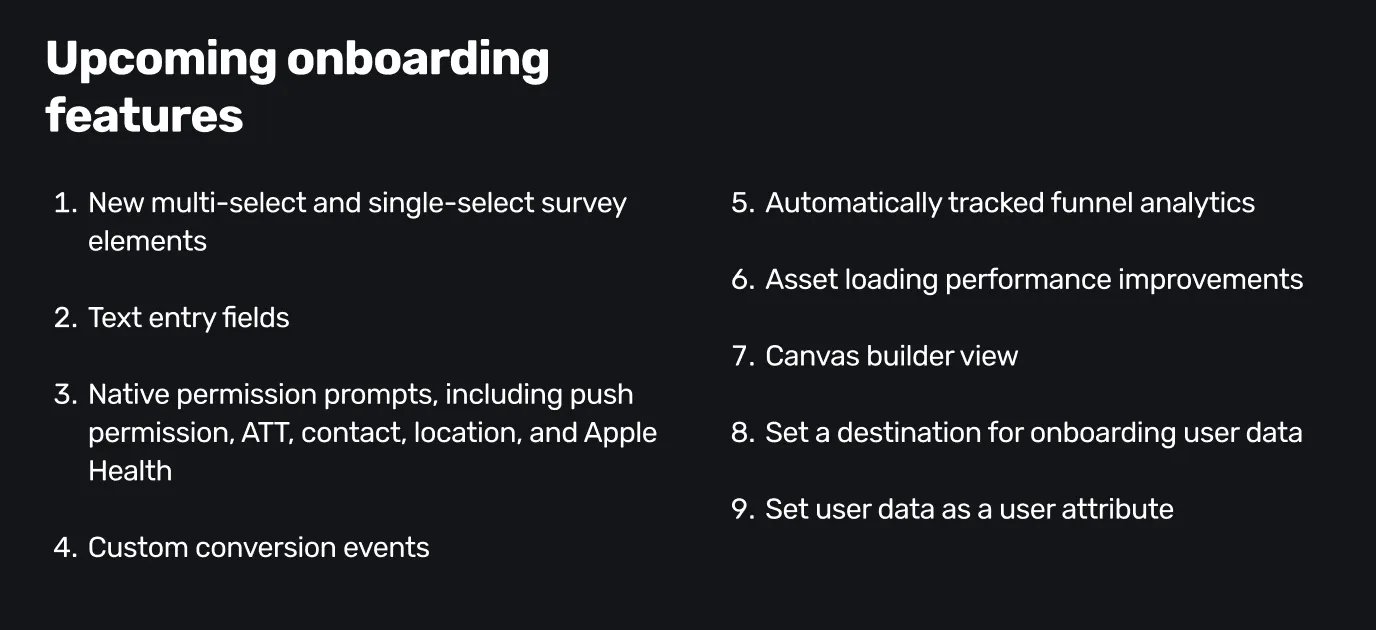
Onboarding: Superwall will release first-class support for dynamic, testable, and updatable onboarding flows. This is a big one, and we're solving the pain of implementing these complex flows yourself. More to come here.
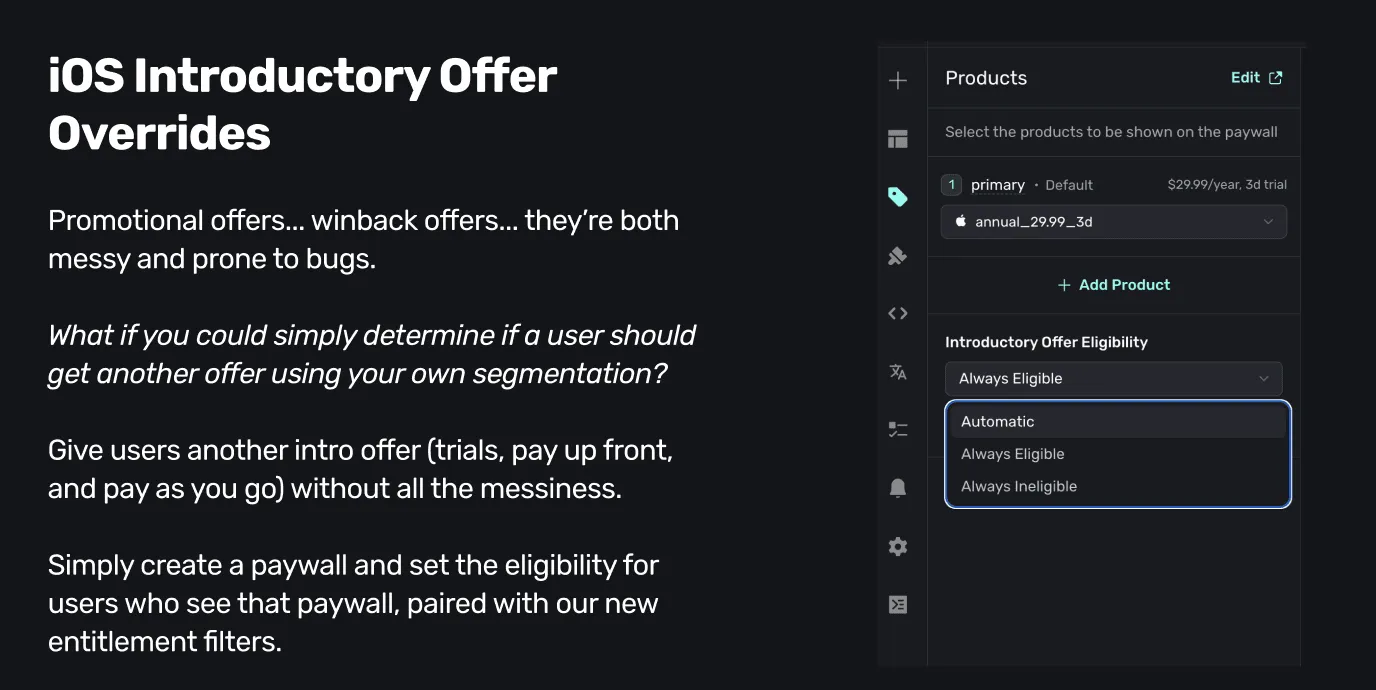
iOS Introductory Offer Overrides: Now, you'll be able to manually control if a user should receive another offer.
App to web parity: Paid intro offers, winback discounts, offer codes, and more are coming.
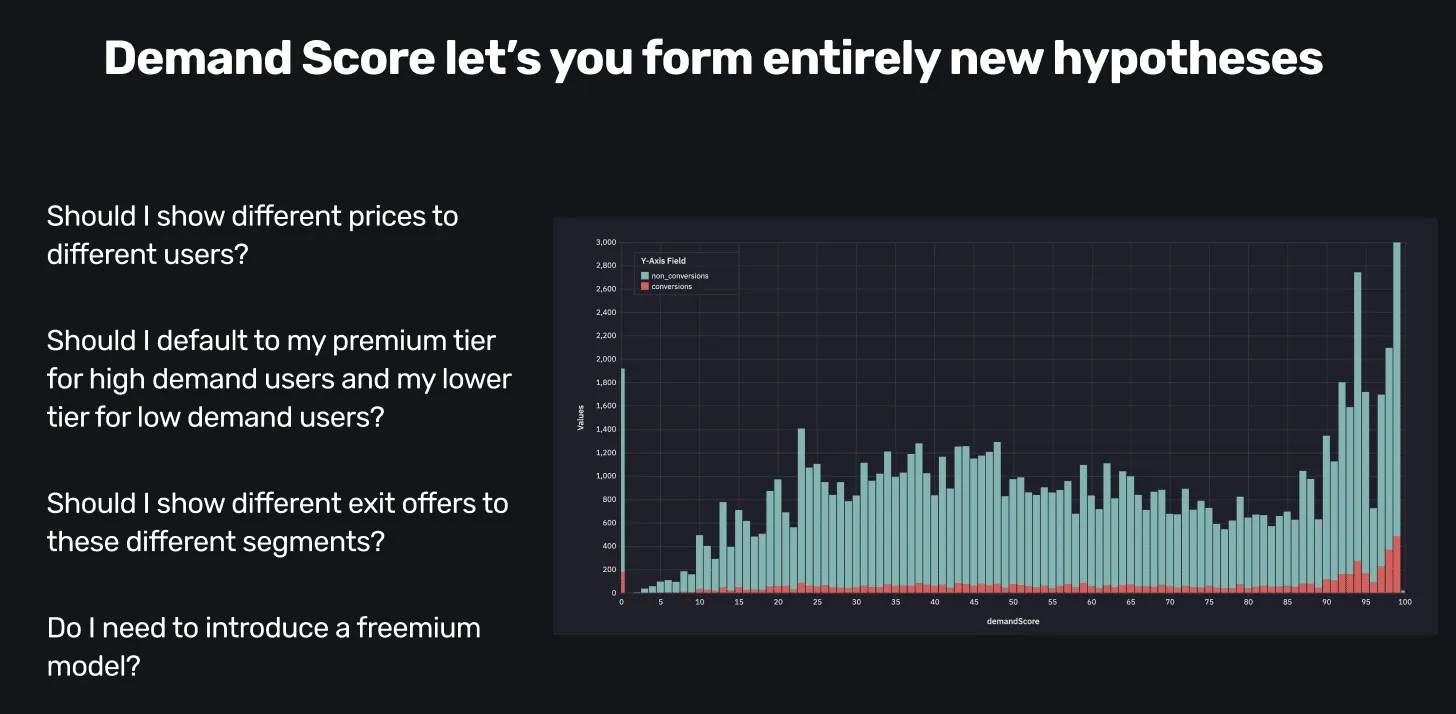
Demand score: I can't wait to show the world this one! We'll be talking a lot more about it soon, but what I love most about it is that it's a feature only Superwall can build. It's a project that combines our data, scale, engineering talent, and AI into one end-product that turned out truly incredible.
Figma to Superwall plug in: What can we say here? Everyone wants this, and it's almost ready to go!
New charts: We're prepping new retention and churn charts, proceeds per paying user, install-to-conversion/paid users, and subscriber movement charts.
Apple Retention Messaging: When Apple officially launches this, we'll be ready too. Expect Superwall integration and experiments built around it.
Final thoughts
Phew! That was a lot, Superwall certainly kept busy this year. And, you can bet we'll do the same in 2026. Whether it's reacting to new court rulings, or simply building the right tools you need to grow, or pioneering new paywalls tests to try — we'll be sure to stay on top of everything so you don't have to. As always, sign up for a free Superwall account today if you haven't already. Then, you can try all of these features today.
And now, on to 2026!